

Jawbone only maintains itself when it has something to support. Once a tooth is lost, the bone that held it begins to resorb within months — and after a few years, there may not be enough volume left to anchor an implant securely. Bone grafting reverses that process by placing bone material into the deficient area, stimulating the body to regenerate its own bone and rebuild the structural foundation an implant needs to last. For many patients in Juno Beach, a graft is not optional — it is the step that makes a permanent replacement possible at all.
At Bluewater Dental in Juno Beach, Dr. Blake Willoughby, DDS, plans grafting and the implant that follows as a single coordinated sequence rather than two separate referrals. We evaluate your bone volume with imaging, recommend the right graft type for your anatomy and goals, and guide you through the healing period so the graft integrates fully before the implant is placed. Our patients leave with a clear picture of what the process involves and a realistic timeline from graft to final restoration.
After local anesthesia is administered, Dr. Willoughby prepares the graft site and places the bone material — which may come from a donor source, a synthetic material, or in some cases your own bone — into the area where volume has been lost. A membrane is often placed over the graft to protect it and guide bone regeneration. The site is then closed and allowed to heal. Most patients return to normal activity within a few days, though full integration of the graft takes several months before implant placement can proceed.
Swelling and mild discomfort for the first few days are normal and manageable with the medications we provide. We ask patients to avoid hard or crunchy foods around the graft site, not smoke during healing, and follow a specific home care routine to protect the area. Follow-up appointments allow us to monitor integration progress. The timeline from graft placement to implant readiness varies by individual, but we will give you a specific estimate based on your imaging and anatomy at your consultation.
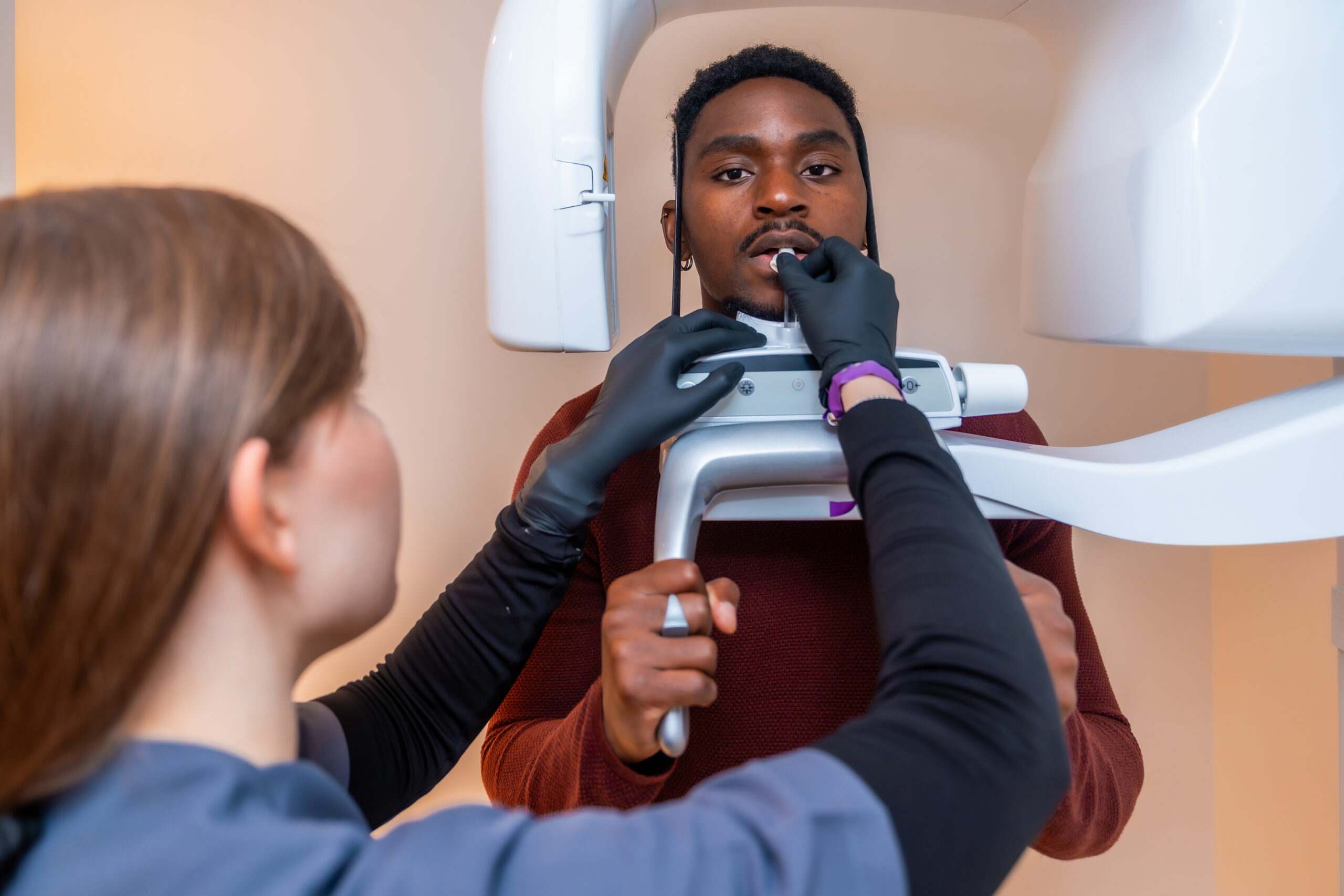

The type of graft we recommend depends on where the bone loss occurred, how much volume needs to be rebuilt, and what the implant plan requires. According to the National Institute of Dental and Craniofacial Research, bone volume and density are among the most critical factors in determining implant candidacy and long-term success. We address four specific graft scenarios:
This is the most common reason patients in Juno Beach need a bone graft. When a tooth has been missing for a year or more, the ridge has often lost enough height and width that an implant cannot be placed without first rebuilding it. We place the graft material, allow it to integrate over several months, then place the implant once the site has regenerated to the dimensions the implant requires. The result is an implant with the same structural support as a tooth that was never lost.
The upper back teeth sit immediately below the maxillary sinuses, and when those teeth are lost the sinus cavity can expand downward, leaving insufficient bone depth for an implant. A sinus lift raises the sinus membrane and places graft material underneath it, creating the vertical bone height needed for safe implant placement. We perform both lateral window and internal sinus lift techniques depending on how much height needs to be gained.
After an extraction, the natural contour of the jawbone can collapse inward, leaving a sunken area that affects both implant candidacy and the cosmetic appearance of a future restoration. Ridge augmentation rebuilds the natural width and height of the ridge so the implant and crown emerge from the gum in a way that looks and functions like a natural tooth.
Socket preservation is placed at the time of extraction, before bone loss can begin. Graft material is packed into the empty socket immediately after the tooth is removed, protecting the site and maintaining bone volume during healing. For patients who plan to have an implant placed after extraction, socket preservation often reduces or eliminates the need for a larger graft later, shortening the overall treatment timeline.
We evaluate your bone volume with imaging before recommending a graft, and we plan the graft type around the implant that will follow — not the other way around. You leave the consultation knowing exactly what the sequence looks like from start to finish.
Bone grafting involves a healing period that varies by procedure and individual. We give every patient a specific timeline estimate based on their imaging — not a generic range — so you can plan your schedule around each phase with confidence.
If you are having a tooth removed and plan to replace it with an implant, placing a socket preservation graft at the time of extraction protects the bone you already have. Waiting until the socket collapses often requires a larger, longer graft to correct — an extra step that socket preservation avoids entirely.
Not always. Patients who have their implant placed shortly after extraction often retain enough bone to proceed without a separate grafting procedure. Whether a graft is needed depends on how much bone volume remains and where in the jaw the implant will be placed. We determine this with imaging at your consultation — some patients need only a minor augmentation, others need a more involved procedure. We will not recommend a graft unless your imaging shows it is genuinely necessary.
Healing time varies by procedure type and the patient’s overall health. Most patients feel back to normal within a few days of the procedure itself. The graft material integrates with your existing bone over a period of several months — typically three to six months for most ridge and socket grafts, and somewhat longer for sinus lifts. We monitor progress with follow-up imaging before scheduling implant placement, so we only move forward when the graft has fully matured.
Both are bone grafting procedures, but they address different problems. A standard bone graft rebuilds volume in the jaw ridge — restoring height or width lost after tooth loss or extraction. A sinus lift specifically addresses the upper back jaw, where the floor of the maxillary sinus has dropped too close to the ridge after tooth loss. The sinus lift raises the membrane and adds bone material below it to create the depth an implant needs. Some patients need a sinus lift in addition to ridge augmentation if both vertical and horizontal volume has been lost.
Dr. Blake Willoughby leads our Juno Beach practice on Donald Ross Road, where grafting and the implant that follows are planned as one sequence rather than two referrals.
Trusted Sources

Monday - Thursday: 8AM - 6PM
Friday: By Appointment
Monday - Thursday: 8AM - 5PM
Friday: Closed
Fill out the form below and we will get in touch shortly.
"*" indicates required fields